
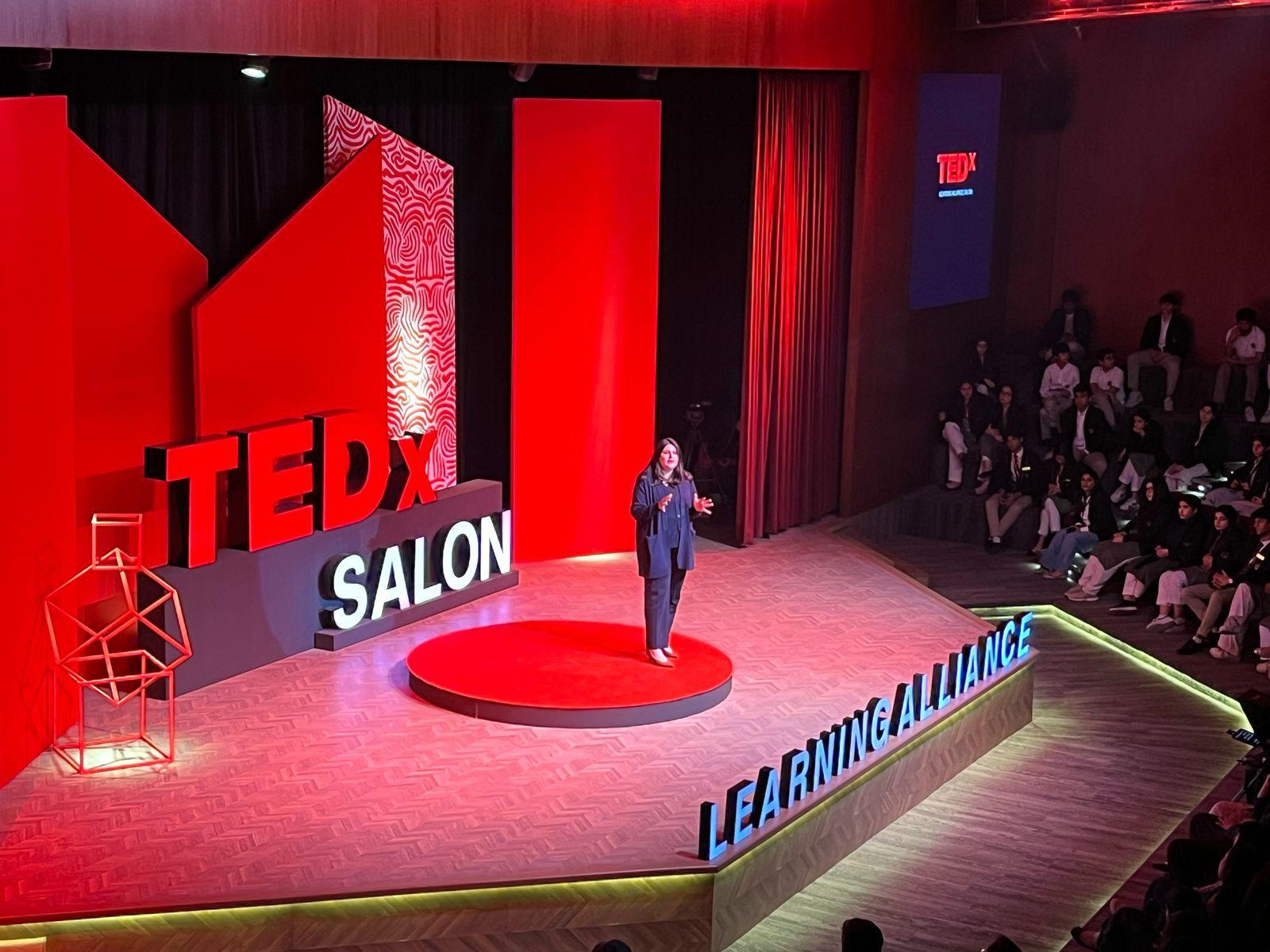
Selina Rashid Khan – Founder and CEO of Pakistan’s first strategic communications agency, Lotus Client Management & Public Relations.
Selina Rashid Khan is the Founder and CEO of Pakistan’s first strategic communications agency, Lotus Client Management & Public Relations.

Widely regarded as Pakistan’s foremost communications leader, she brings over two decades of leadership experience representing the country’s most influential brands, projects and individuals. She continues to play a pioneering role in positioning communications as a globally exportable service from Pakistan.
Selina is the first and only Pakistani recipient of the prestigious global PR News Top Women in PR award. She currently serves as President of PREDA, Pakistan’s Council for Public Relations, Event Management, Digital and Activations, and is one of the only South Asian communications leaders selected to be a part of the global Forbes Business Council.
Her public sector contributions include serving as Chair of Brand Pakistan, an advisory panel to the Special Assistant to the Prime Minister on Tourism and Overseas Pakistanis, and as an honorary advisor to the Foreign Minister’s Public Diplomacy Reform initiative.
Selina also holds board positions with International Industries Limited (IIL) — Pakistan’s largest manufacturer of steel and polymer pipes, Avanceon — a global leader in industrial automation and energy management solutions and the Zaman Foundation, which provides underserved communities across Pakistan with access to water, education, healthcare and essential services.
She holds an Honours degree in Politics from the University of Warwick, UK, and has completed specialised programs in communications and leadership at Harvard University. Before founding Lotus, she gained foundational experience at Avalon Public Relations, a leading UK-based PR firm.


How would you introduce yourself beyond your professional title? Who is Selina Rashid Khan at her core?
Honestly, I have a bit of a wardrobe of identities. I’m as shy as I am confident. I am as outgoing as I am introverted. But at my core, I think I am in a state of search and am therefore largely introspective. Search for a better understanding of myself and the world around me. I care deeply about integrity, and I keep trying to find ways to lead life with more empathy, honesty and credibility.
Can you walk us through your journey, what led you to build Lotus PR, and how has that evolved over time?
I founded Lotus in 2007 at the age of 24. At the time, there was no real strategic communications infrastructure in Pakistan and therefore there was no pre existing blueprint. I saw an opportunity to create an agency that served people and brands while also shaping how we engage with culture, community and purpose. Also, living and working in London at the time, i was quite frankly impacted by the way Pakistan was framed to the rest of the world. Spoken of as terrorists; as backward, myopic.
These negative stereotypes dominated the public narrative and disturbingly, even shaped how many Pakistanis saw their own. Yet the Pakistan most of us had lived in was diverse, hospitable and culturally rich with some of the world’s most creative and enterprising people out there. Those people and stories were my motivation for building Lotus. That’s why, for the first decade, Lotus focused heavily on telling stories in music, fashion, film and beauty; reclaiming and reframing Pakistan’s cultural narrative through our clients’ voices.
Over the past eight years, we’ve expanded our focus to corporate communications, working to bring structure and strategy to internal and external narratives for both local businesses and multinationals. Today, we proudly export Made in Pakistan communications services, and I take great pride in being one among others helping to replace the narrative of Pakistan as ‘unreliable’ and ‘untrustworthy’ with one of strategic competence and creative leadership.
Over the years, I’ve been privileged to work with a team that helped grow Lotus from a small start-up on my parents’ dining table to an award-winning agency. But beyond scale, what I’m proudest of is the soul of the company. Our values, our people and our intention. We haven’t always gotten it right, but our spirit has always been to learn, grow and rise when we fall.
What was the communications landscape like in Pakistan when you started, and what kind of change did you hope to bring?
The communications landscape in Pakistan, when I started, was fragmented, transactional and largely reactive. Brands typically engaged with the media only in response to negative coverage, rarely to proactively shape narratives. When engagement did happen, it was inconsistent and often limited to securing event coverage, not building long-term relationships with audiences or stakeholders.
I wanted to change that. My goal was to build a communications ecosystem that was strategic, structured and built on sustained, proactive engagement. I believe communications shouldn’t be treated as an afterthought or a one-off activity but as a core discipline that, when done right, can shift perception, influence policy, foster inclusion and contributes to nation-building.
Today, in this digital world, the influence of communications is instantly visible and it’s in front of us in real-time, shaping everything from public opinion to consumer behaviour, but the truth is, communications has always held this power. It’s just more amplified and measurable now.
We now see storytelling, PR and narrative strategy playing central roles across sectors and I’m proud that Lotus helped lay the foundation for that transformation.
What have been some of the defining moments in your career; milestones, turning points, or challenges that shaped you?
The early days of Lotus were defined by explanation. By that, I mean constantly having to explain what PR was and more importantly, what it wasn’t. It wasn’t event management. It wasn’t advertising. It wasn’t media buying. It took a good six to seven years for PR to be recognised as a standalone industry, rather than an afterthought tacked on to other marketing functions. In many ways, the last few years have been regressive with advertising and digital agencies selling PR as a sideshow or defining it as influencer marketing alone. But that’s another grouse for another day! In terms of milestones and what shaped me, working on platforms like Coke Studio and leading cultural exchange initiatives that positioned Pakistan differently were formative experiences. But over time, I’ve come to realise that some of the most defining moments happen quietly, behind the scenes and without recognition.
One such milestone was working to bring digital diplomacy into the Ministry of Foreign Affairs as a necessary dimension of public diplomacy. It was part of a broader reform agenda I contributed to under the Foreign Minister, integrating private sector thinking into a bureaucratic system. It meant translating brand and narrative strategy into a macro, national context. Not to sell a product, but to help reshape how Pakistan communicates with the world. The work came with resistance, intrigue and the challenge of navigating an unfamiliar structure as a private sector outsider. But I kept my head down and focused on the work, knowing it may never be acknowledged as mine, and being at peace with that. What mattered was the outcome. A tangible milestone from that time was helping bring Pakistan into the Digital Cooperation Organization (DCO), a platform shaping global digital diplomacy and being part of the team that introduced and saw that opportunity through.
In terms of turning points, COVID-19 was a big one. Within weeks, most of our clients, especially those in retail, were forced to shut down factories and scale back. It was a defining crisis for the industry and for a small to medium business like mine. But it also became a catalyst: internal communications and crisis communications emerged as core practice areas for Lotus. Brands leaned on us not just for messaging, but for clarity and stability in chaos.
Being invited to join the Forbes Business Council has also been a milestone. It has offered visibility of our industry on a global stage and given me the opportunity to represent Pakistan’s business prowess which has been largely underrepresented or overshadowed, especially in South Asia.
While not a traditional milestone, a deeply personal victory is having built and sustained this work through motherhood and marriage, without ever stepping away. That continuity has shaped how I lead and how I show up for others.
Finally, working in Pakistan, amid constant political and economic flux, is in itself a defining challenge. As I wrote just recently, the entrepreneurial spirit is resilient, but it is not inexhaustible and survival is not a strategy. That said, working in tumult forces you to think fast, adapt quickly and build solutions. It tests your endurance, but it also sharpens your purpose.
Your work has intersected with branding, culture, diplomacy, and media. How do you view the power of storytelling in shaping national and global perception?
Storytelling is the architecture of perception. Whether you’re positioning a nation or a brand, the stories you choose to tell and how authentically you tell them determines how the world sees you and how you see yourself. In Pakistan’s case, for far too long others were telling our stories and that too, only those stories which spoke of anguish, destruction and violence.
I believe our work has been about reclaiming that narrative, and projecting the complexity, creativity and depth of our people and our businesses, on our own terms.
What role do you think PR and communications play in preserving culture or projecting a new cultural identity?
A profound one. After all, PR and communications have the power to archive, amplify and reimagine culture. In emerging countries like Pakistan, where narratives are often contested or underrepresented, communications can serve as a form of cultural preservation and reinvention. Whether it’s through music platforms such as Coke Studio bringing the traditional and modern together, films bearing witness such as those by two-time Academy Award winner Sharmeen Obaid Chinoy or our athletes making history such as our Olympian Arshad Nadeem; how often, how consistently and how we choose to tell our stories often determines what survives and what thrives.
You’ve mentored and shaped many professionals. What advice would you offer to the next generation of women stepping into leadership roles?
Don’t wait for permission. Build your seat at the table and while doing it, build a bigger table. Surround yourself with people who challenge you and not just those who agree with you. Growth rarely comes from comfort. Always remember to evolve and adapt to the generations around you.
Also, you don’t need to be perfect to lead. Too often, women are held to a higher standard than men with less margin for error, and less space to show emotion or vulnerability. Don’t let that deter you. Your emotional intelligence is your superpower. Use it with intention. Good leadership isn’t just about decisiveness or authority. It’s about connection, intuition and the ability to bring people along with you.
What continues to drive you? What are you currently exploring or building that excites you the most?
Professionally, I’m driven by the idea of building an ecosystem for my industry. Something that will survive and grow with each generation. My work as President and co-founder of PREDA, Pakistan’s first association for professionals in the fields of PR, Event Management, Digital and Activation reflects that. From pushing for fair payment terms that enable business growth, to advocating for government recognition of our economic contribution, to lobbying for better taxation policies for our industries and working to dismantle negative client-agency dynamics — the task ahead is mammoth, but necessary. Alongside this, I’m always enthusiastic about the opportunity to build communications strategies for businesses around the world, from right here in Pakistan.
What does legacy mean to you at this stage in your journey?
For me, legacy is about what I am creating to leave behind, for others to build upon. If I’ve helped create an industry where people, especially women and young professionals, feel seen, valued and capable of leading, I’m happy. If I’ve helped tell stories that matter, challenged harmful narratives, or nurtured a culture of change, authenticity and inclusion — then I’ve done a lot of what I set out to do.