FAHAD HUSSAYN – Designer and Artist
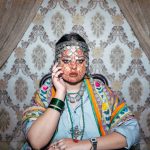
Fahad Hussayn set out from the comfort of his home to find himself as an artist over 23 years ago, collecting along the way every skill and experience he liked or needed, including some crucial survival tools.
Today, he runs a fashion business comprising four brands that he creatively directs, while also operating his academy currently in a soft run that aims to bridge the gap between commerce and the arts. His creative journey is meaningful because it has been his means of survival. It’s how he has learned to express himself and build everything he once only imagined. It’s how he stitched together an identity when the world couldn’t hand him one. For him, art became the only language that never misunderstood him.

We asked him some questions to get to know him better and here is what he had to say
What keeps you going what drives you to wake up and start creating every day?
I’ve struggled all my life to fit in and find myself. When I was young, people often said I was “very ambitious” about what I believed I could do. Sometimes it was praise. Sometimes, insult. Sometimes bullying. And on some days, it was outright abuse. I learned to channel all of it into my work whether it became a story, a song, a collection, a drawing, or a print.
Later in life, I was told I was “too emotional.” I learned to turn that into a strength, too. Over time, I also learned to protect
my peace while using my emotions as tools to create. No matter what life throws at me, I continue to surprise myself, realising that I’m capable of more than I ever thought. Every day, I wake up grateful that I get to do what I love while supporting a part of the industry that deserves preservation. That keeps me going through everything.
There is a quiet rebellion in choosing to create every day, especially when the world gives you every reason not to. But I choose it anyway because art has always chosen me back.
In your view, how can art and creativity contribute to meaningful change in society?
Art was born out of purpose perhaps when someone first drew a hunt on a cave wall with burnt wood or when the wheel was invented. Art continues to evolve through the mind of its creator. To me, that’s the fraction of God we all carry within us.
 Art can guide, provoke thought, create livelihoods, and provide therapy. It can build safe spaces where people can keep creating and documenting. It uplifts other industries, too. Not every piece of work needs to be monumental. Change often begins small and grows that’s the true power of art. And when needed, it can ignite an entire revolution.
It holds the memory of civilizations and the hope of what could be. In the right hands, it can disarm cruelty, heal wounds, and even rewrite futures. That is the magnitude I believe in.
How do you stay creatively inspired, especially during challenging times?
I pour every situation onto paper. Sometimes it becomes a song, a sketch, a rough draft, or even a random doodle. On other days, I escape into books or a series of them. My escape worlds are fantastical, impossible, and far removed from reality, so I never have to question their origins.
My mind is hyperactive, but I’ve learned to master it. I can create mechanically when needed through design or the other skills I’ve acquired or spontaneously, from an instant thought. I often store and revisit ideas for years before bringing them to life. I can also create instantly for a client be it creative direction, styling, music, or image making alongside fashion.
Sometimes inspiration doesn’t strike like lightning it arrives in fragments, in silence, in the middle of grief or stillness. You just have to stay open enough to catch it.
What recurring themes, emotions, or questions show up in your work?
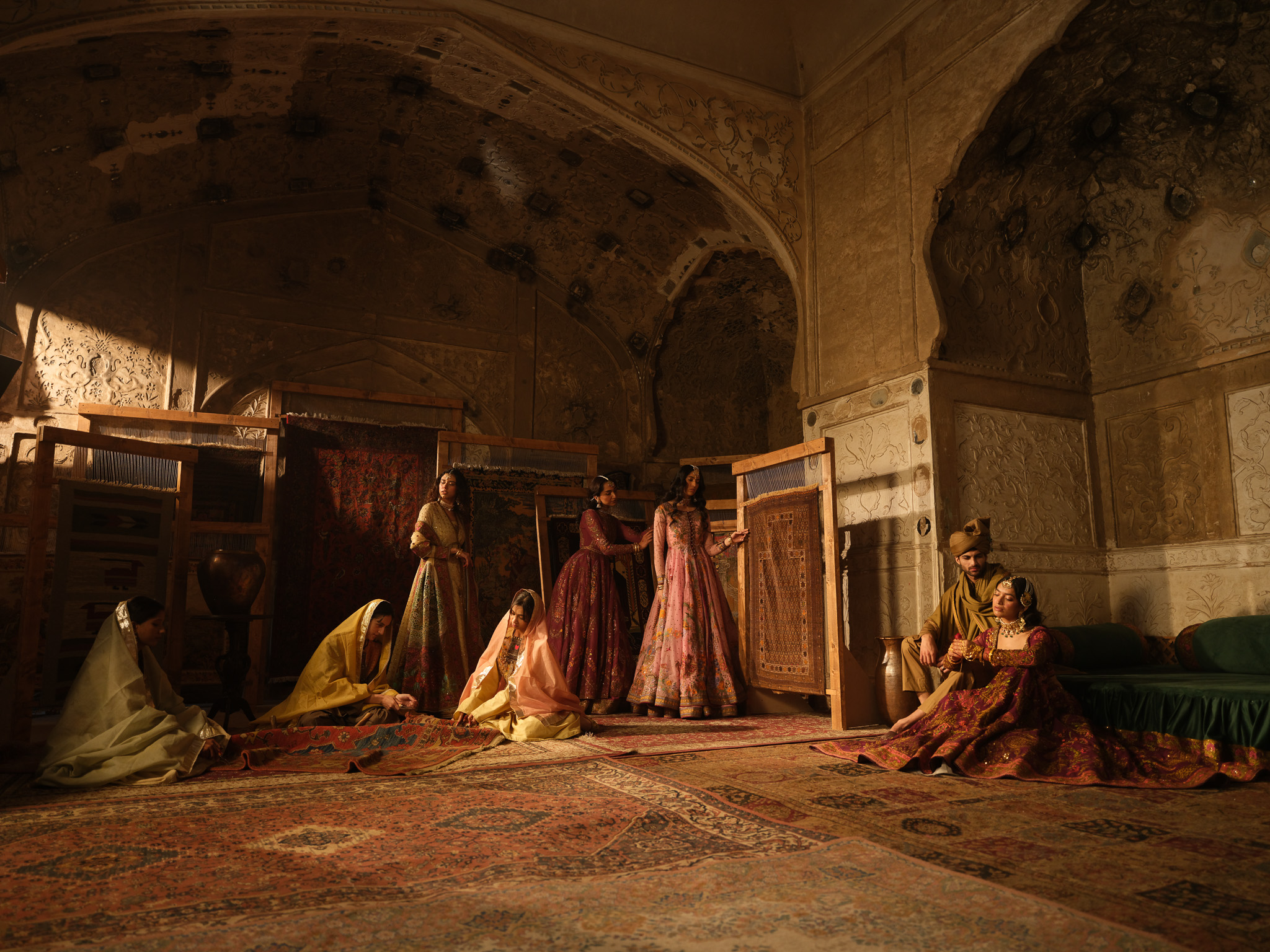
Many. I often transform what I observe into stories, films, or photographs preserving them in any form I can. I’ve explored themes like human rights, self-realisation, and breaking free from toxic cycles. I also love reimagining traditional narratives , reconstructing heritage and the art of storytelling.
 I don’t confine my work to one question or emotion. When something feels right, I release it even if it’s a Punjabi tappa filmed for a lawn campaign with an underlying narrative about domestic provocations.
My work is often an echo of what goes unnoticed a resistance to erasure, a celebration of contradiction, and a reminder that beauty can exist in both the sacred and the mundane.
Who is an artist (currently active) that inspires you deeply?
There are many, each in their own way. In visual art: Salman Toor for his painting, Annie Leibovitz for her framing, and Zainub Jawad for her thought process and vocal strength. In fashion: Robert Wun and Daniel Roseberry for leading global luxury back to its roots. I find it fascinating that much of the fashion world is now following their lead, alongside a few other originals.
I see fashion largely as an outsider now. My skill set has evolved beyond it. But I do miss creating collections that were purely about fashion and technique. I wish Pakistan had the kind of evolution where investors supported genuine talent instead of creating brands for bored housewives or treating fashion as just another real estate venture.
We don’t need more noise in fashion we need soul. And soul can’t be manufactured or bought. It’s felt. It’s lived.
Who is your all-time favourite artist someone whose legacy has moved you?
Alexander McQueen. I relate deeply to his process, his struggle, and his vision. His death moved me so profoundly that I created a collection inspired by my favourite of his works, as an homage, for my second brand showcase. That moment triggered a trickle- down effect in many of my future collections shaping my approach to draping, to building accessories, and to forming emotional connections with creations that didn’t require approval, only perspective.
The collections I created in those years earned me the title of Asia’s McQueen by Hilary Alexander, among other accolades.
They say one should never meet their heroes but there’s no manual for coping with their death. A lesson I learned from Lee, and from studying his life long after he was gone, is this: legacies are still real in the digital age. Influence does not recognise boundaries of race, politics, or time.
He taught me that brokenness and brilliance can coexist that pain can be beautiful if you know where to place it.
What role does art play in your personal life and sense of self?
Art is my survival, my language, my shelter, and my mirror. t’s how I know who I am. It’s the only place I’ve ever belonged without needing permission.
What message or advice would you offer to young, aspiring creatives navigating today’s world?
Be original. Trust the old-school process and then use every modern tool available to evolve it, without skipping the foundation.
Don’t fear obscurity, some of the most authentic work happens there. Chase excellence, not validation. And most of all, let your art say the things your mouth never could.
In today’s world, how do you stay relevant and balance traditional art with technology?
I don’t believe in chasing “relevance.” That’s not how legacies are built. Art isn’t meant to follow trends; sometimes it’s meant just for you and people will find their own meaning in it. Sensationalism belongs to entertainment, not art.
I find balance by refusing to compare and by staying committed to my own process. I constantly learn new skills. I still design my own prints, edit my campaigns, and teach myself AI tools sometimes while watching a fantasy series. My mother taught me never to waste time, and to make the best of what’s around me instead of waiting or complaining. That lesson has shaped me for life.