
ILYAAS ALLAAH BUKSH – A Self-taught Travel Photographer from Pasni
Ilyaas Allaah Buksh is a self-taught travel photographer from Pasni, where the desert meets the sea. Once an Imam in his father’s masjid, he later discovered a deeper connection with God in the mountains, beaches, and vast landscapes of Balochistan.
For over eight years, he has wandered his homeland with a camera, capturing its rugged terrains, resilient people, and breathtaking beauty. What began as spontaneous curiosity evolved into a lifelong practice—his eyes now working like multiple lenses, observing the intricate details of his culture and land. Rooted in his identity, language, and traditions, Ilyaas draws inspiration from the geography of Balochistan, where every season, texture, and horizon fuels his art. Through his lens, he preserves not just scenery but the spirit of a place he calls home, embodying both dedication and love for the craft.

What draws you to capture Balochistan again and again?
This heavenly geography itself draws each moment of mine to capture its motherly dignity and virtue through photos. I am a Baloch photographer showing the landscape, geography, literature, culture, and the pain of my people.
When I was a kid, I knew nothing about myself, my language, my land, or my values. I started wandering when everything was just new—a virgin land where every detail was undiscovered.
For me, capturing again and again is never enough. To survive deeply in the soil’s veins, there is only one path to explore— Love.
I claim: “Who loves, comes again and again and again.”
What message or emotion do you hope your audience feels when they experience your work?
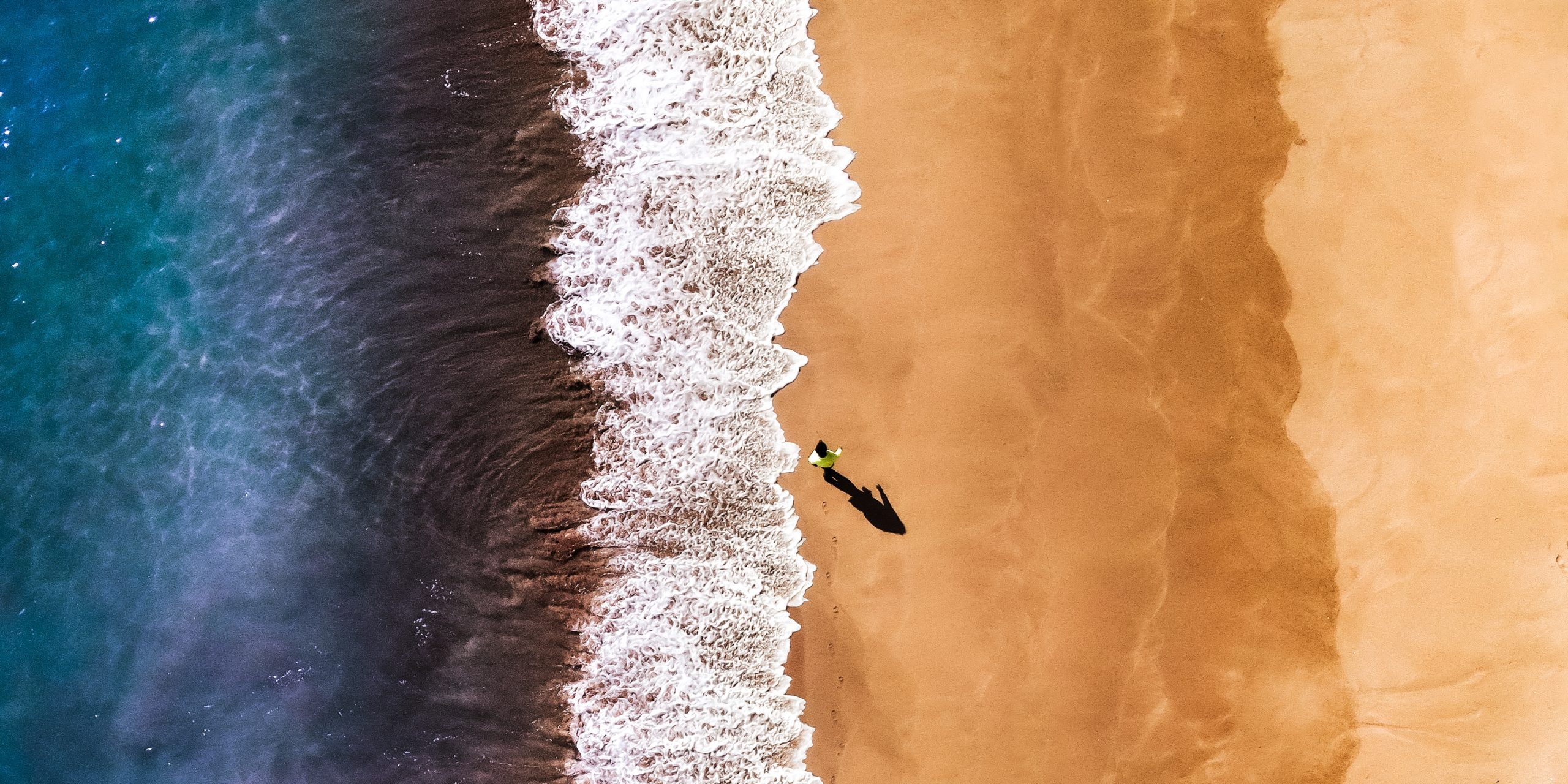
I personally don’t add a message or emotion in photos but art is for the one who needs it the most. They ask me, “Sir, why all of your images are in the warm yellow tone?” I reply, because I am sad.
My one-sided audience is a Baloch audience exiled from Pakistan. They often tell me to work more so they can see their land in thousands of perspectives.
Art is not chained up with emotional things. It’s not intended to preach, but if someone takes meaning, it’s their pleasure.
In your view, how can photography contribute to shifting narratives and expanding global perspectives about underrepresented regions like Balochistan?
Photography carries documents—each detail of a documentation process. I shift narratives to make people believe through my photos that I have a very beautiful geography.
I capture my people’s pain in their eyes, their strength on the back of their camels, their identity on the forehead of history.
Balochistan is deprived of facilities, proper internet, industry, or institutions. And there are uncountable check posts. Three times my camera memories were formatted in these war-type circumstances.
What are some of the most memorable or transformative moments you’ve had while photographing the province?
Once I was nothing but an Imam of a masjid. My work transformed me into a liberal traveler.
On a winter morning, I jumped out of the jeep. There was a vast ancient land beneath my feet; far away stood the Hillary protectors of Bolan, the Bolanian range of mountains. Looking higher to the west comes the chest of Rakhshan. I stood on a small dumped area, and my archaeologist friend told me, “Ilyaas, you are standing on the earth’s oldest farming and agricultural civilization which is 11,000 years old.” I was mad at the landscape before, but this experience of standing on the land of Mehrgarh civilization told me everything in detail about how to work and how to deal with the art.
14 nights of camping in Hingol in 2021 totally changed my way of looking deeply into the heart of situations. The glowing waves of Haft Talaar, setting sun of Mallaar, starry nights of Sapat, and the most dramatic mornings of Daraan – all these things transformed me unknowingly, as the wind shapes the desert, as I was shaped by the wind or nature.
What keeps you creatively inspired, especially when access, terrain, or emotion becomes challenging?
I take inspiration from the work itself. Everything is changing by the tick of the clock, so do my conditions.
In this journey of life, health, wealth, and chaos will not remain in the same color or conditions. Everything is changing by the tick of the clock, so do my conditions. Especially wandering in a war zone like Balochistan, I feel scared sometimes; I get emotionally stuck, and then for me, there is only my work that pulls me out of speeches and transforms me into physical work. Beneath this fear, I know that traveling and capturing this region deeply will surely take hundreds of years and my age will not be able to work on all necessary things which are untouched yet. I really fear that day when I can’t work more on my land—when I die. I touch every aspect and there opens a digest of works, works, works.
What do themes like silence, scale, and solitude mean in your work?
I live in silence scaling my whole journey to find solitude beside these hurdles of life.
I don’t or can’t say anything if I wanted to, but I can’t; I talk through my photos.
Once, on a winter morning, I was wandering through the most amazing parts of Hingol alone with my bike, with my camera gear, a novel, and thousands of Balochi, Urdu, Persian, and Arabic songs. I cruised toward Buzi Pass and I kept descending. Came the loneliest sphinx of all time, a sharp winter evening light of sunset was hitting that muddy formation so hard that my eyes were stuck on that ancient art.
I felt myself very old as I was looking at those details not knowing who set up these artistries over time. Without distraction, I found myself in that form of silence and solitude, as I was deaf and dumb, can’t listen and speak. The only music of wind I was listening wasn’t from this era.
Personally, I have a growing eye for weighing and scaling the height and weight of the work. My friend, a poet, often said, “Ilyaas, this isn’t just a picture; it’s a poem.”
I lived in isolation for three or four years till February 2025. Between this time, I felt myself standing beside an old tree which is telling every secret it knows about this earth. Silence became life—not intentionally but situations carried out the whole story.
Mevlana Rumi said, Let silence be the art you practice. It’s to claim that this silence and solitude means the whole body of my work.


I work for myself. I work for my loneliness transforming into the utmost solitude. I work in public; I capture droughts; I capture the sea. I look deeply into the mountains and bring back just an album for my own geography, own landscape, culture, and literature.
Photographers or artists who influence you?
The art of seeing things in various or single ways I learned from nature and myself, but to know what’s more important for my heart.
I am close with a Baloch filmmaking artist from Alandoor, Kamalan Beebagr. I always observe that scene of our first meeting. One day, he invited me to his area. He said, “Come here; we will plan a trip to Zamuran, a purely untouched land of Baloch settlements.”
December 2020, I rode to Alandoor. The next morning, I was recording the visuals with narration in Urdu. Kamalan asked, “Why talk in Urdu when you know your own language more properly?” I felt that in seconds and started my first documentary in Balochi language after hundreds in Urdu.
After that, I learned everything from Kamalan and my travels. He suggested me great books and a list of Persian, Russian, Turkish, and French movies.
He used to say that making beautiful frames isn’t the secret, putting part of your vision and wisdom into the work is. I am deeply moved by the third eye of Kamalan to see what’s good and what’s bad, to see what is art and what’s craft.
How can I be an artist without perfect practice and mindfulness? Keep calm.
What advice would you offer to young photographers?
Stay hydrated, guys!
The fire you lit in your hearts makes it more shiny. Use your art or craft for the only reason to give your people a remain of your things. The things are your land, your literature, geography, culture, and beliefs. Go for them; work indivisible but find a piece of your work influencing all around you. What people see in your works is the work itself.
I’ll be pretty clear to you! Fall in love so hard that your pieces of soul start gossiping to each other, “Where does this man want to reach?” Fall in love so extremely that your photos are discussed like poetry or the final page of a novel.
Marwan Makhoul said, “In order for me to write poetry that’s not political, I must listen to the birds, but in order to hear the birds, the warplanes must be silent.”
They ask me, “Sir, how do you capture those amazing landscapes?” I reply because I know the geography, I know the behavior of light and darkness here. I learned everything in travels, from friends, from books and films, and the maestro itself—THE LIFE.
Art is one thing—you vomit poems, they vomit stories, I vomit photos. What comes from my eyes are exactly the formation of me.
Again, stay hydrated, fellows! Keep your spirits up to touch the untouched. There is a lot to see.